How to Beat Procrastination: The Definitive CBT-Based Guide
Constantly putting tasks off? Discover how to beat procrastination using practical Cognitive Behavioral Therapy techniques.

Procrastination is often mistaken for laziness or a character flaw. But modern psychology and neurobiology show that procrastinating is actually a mismanaged emotional regulation strategy. We put a task off not because we're lazy, but because our brain wants to escape the stress, boredom, fear of failure, or anxiety that task triggers.
For people living with ADHD or generalized anxiety, procrastination can spiral into a paralyzing cycle of guilt and stress.
In this definitive guide, we break down how to beat procrastination using practical tools and techniques grounded in Cognitive Behavioral Therapy (CBT).
The Procrastination Cycle
Understanding the mechanics of procrastination is the first step to breaking it. The cycle works like this:
[Stressful Task] ➔ [Anxiety / Fear of Failure] ➔ [Escape (Social Media, Pointless Cleaning)] ➔ [Temporary Relief] ➔ [Guilt / Tight Deadline] ➔ [More Anxiety]
The brain prefers the immediate reward (relief from escaping the task) over the long-term reward (finishing the project). To work around this, we need to reshape our mental approach.
Practical CBT Techniques to Stop Procrastinating
Cognitive Behavioral Therapy focuses on changing dysfunctional thought patterns and unhelpful behaviors. Here are 4 key practical tools:
1. The 5-Minute Rule (Reducing Friction)
Most of the energy spent procrastinating is burned in the moment of starting. Once you're in motion, the brain shifts into flow state and the task becomes far more tolerable.
- How to apply it: Commit to working on the task for just 5 minutes. If you want to stop after that, you're allowed to. Most of the time, you'll keep going.
2. Extreme Micro-Steps (Dopamine Breakdown)
The brain procrastinates when a task feels huge and abstract. "Write the final report" triggers the escape response. "Write the first sentence of the introduction" is easily doable.
- How to apply it: Break the task into absurdly small steps. Don't try to clean the whole house — just organize one drawer. Finishing each micro-step releases dopamine, pushing you toward the next one.
3. Managing Your Internal Dialogue
Procrastinators tend to use pressure-loaded language: "I have to do this," "I'm forced to finish today." This activates the brain's threat response.
- How to apply it: Shift your internal language to choice-based phrasing: "I'm choosing to start this task now because I want my weekend free." This hands control back to your mind.
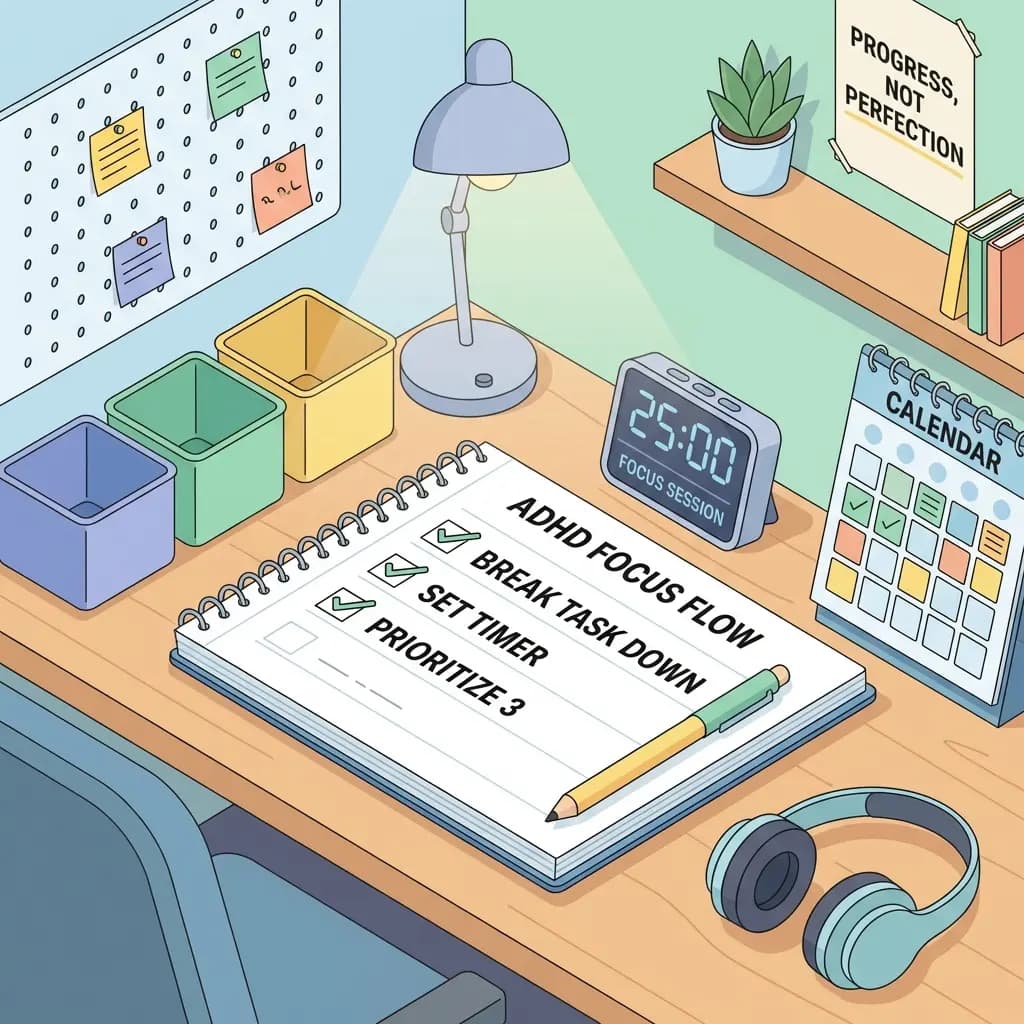
4. Modified Pomodoro Technique
Use short focus blocks with structured breaks. For hyperactive brains, knowing there's a reward break coming in 20-25 minutes makes the focus period tolerable.
How Lumi Helps You Break Decision Paralysis
Lumi was built with interactive CBT-based tools to actively fight procrastination triggers:
- AI-powered task breakdown: You can tell Lumi, "I have a project due and I can't get started." She'll help you split the goal into logical 5-minute micro-steps.
- Holding your guilt gently: If you spent the day procrastinating and feel guilty, Lumi holds that feeling without scolding you, helping you emotionally reset so you can start again with less weight on your shoulders.
Talking to Lumi is 100% free and available by chat 24 hours a day. Try talking to Lumi on our homepage to beat procrastination today!