How to Organize Your Routine With ADHD (and Actually Stick With It)
Tired of unused planners and ignored to-do lists? Discover a methodology adapted for attention deficit to organize your days.
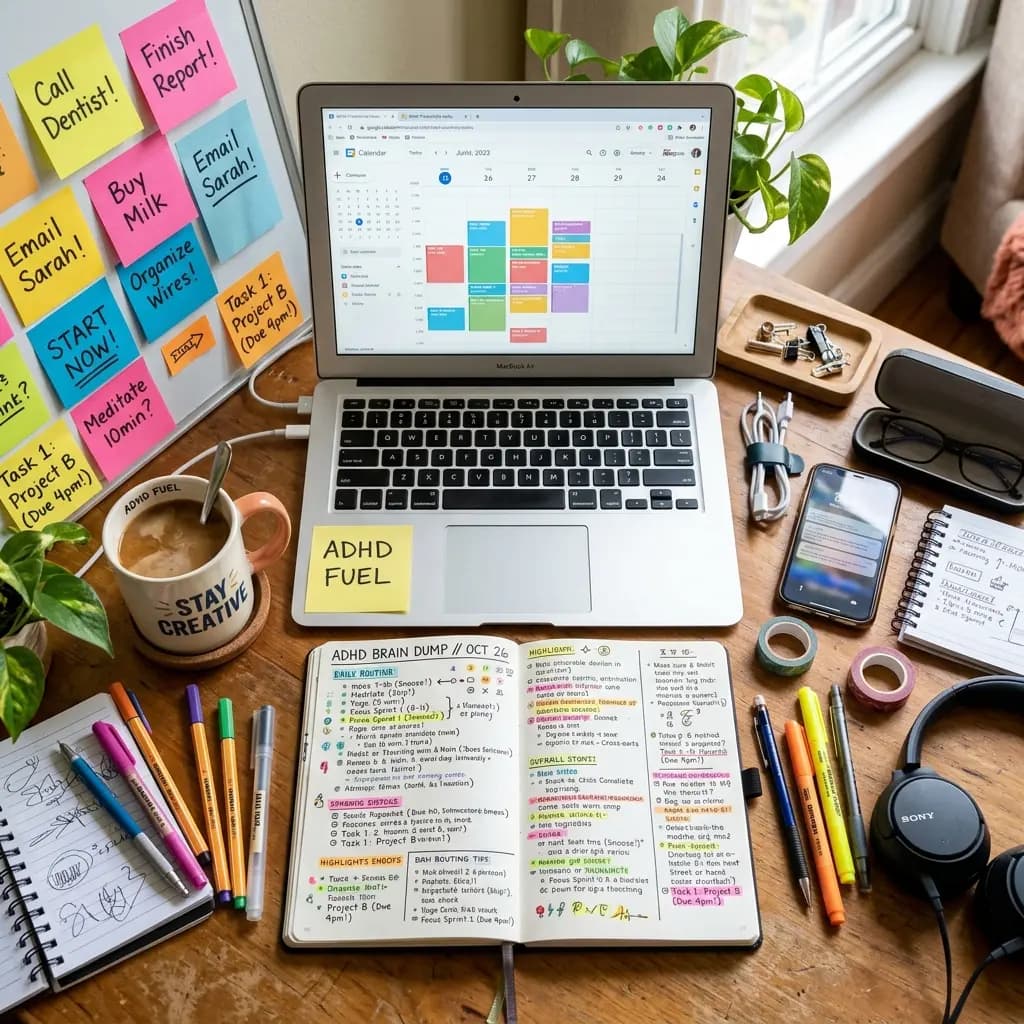
The biggest mistake people with ADHD (Attention Deficit Hyperactivity Disorder) make is trying to use organizational methods built for neurotypical brains. Every year you buy a beautiful planner, use it for three days, and then it becomes dead weight. The guilt hits hard.
The truth is that neurodivergent brains don't work with long, linear lists. Executive dysfunction turns even taking out the trash into an emotional rollercoaster. Here's how to organize your routine with ADHD using systems built around your brain's naturally low dopamine.
1. The Long-List Paradox
When you write "Clean the house," your brain looks at it, sees no "step-by-step," and freezes (ADHD paralysis).
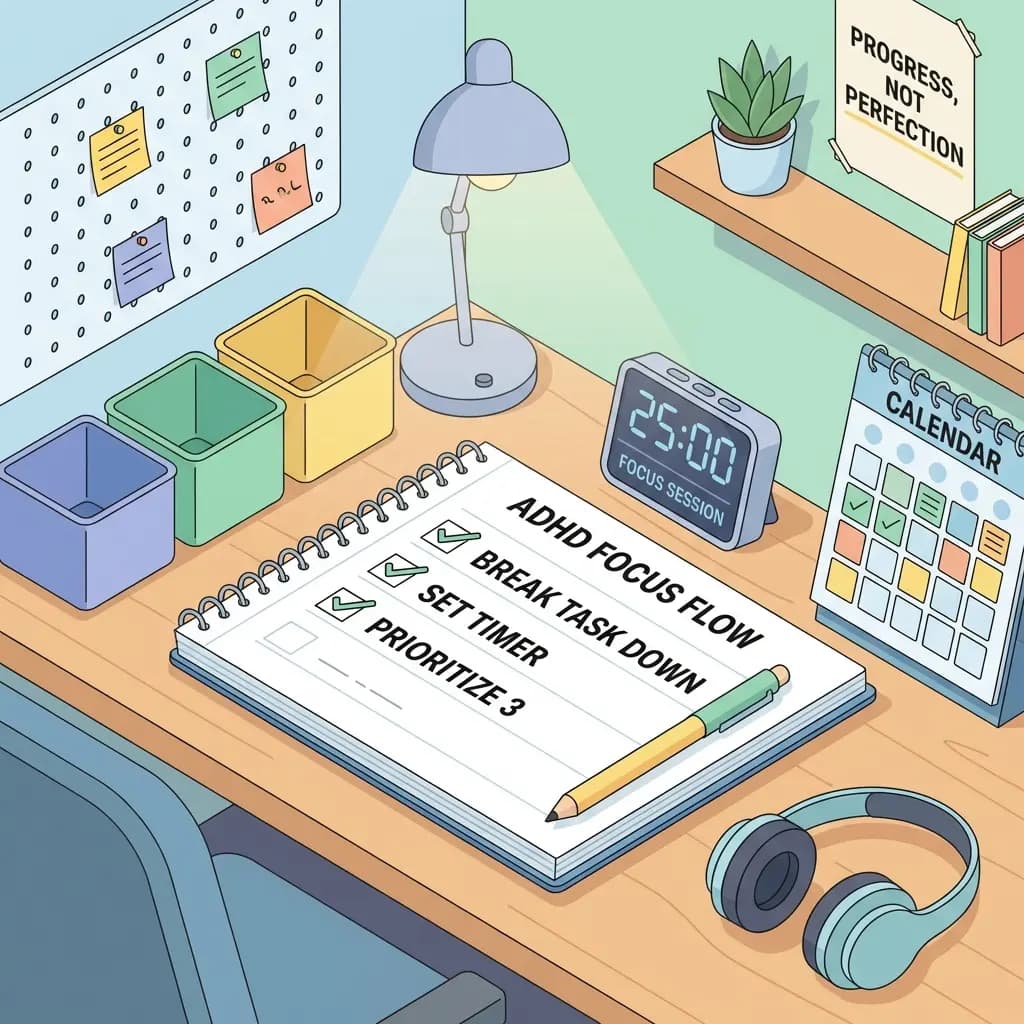
The solution: absurdly small task breakdowns.
Instead of "Clean the office," write:
- Just take the dirty cups off the desk (2 min)
- Put the cables in the drawer (2 min)
- Throw away the paper trash (1 min)
Completing a 1-minute micro-task releases the initial dopamine your brain needs to keep the gears turning. The secret is reducing "friction to start" to zero.
2. The "Half-Done Is Better Than Perfect" Rule
People with ADHD often struggle with perfectionism or "all or nothing" thinking. If they can't clean everything, they clean nothing. Break that rule. Leave clothes neatly on the chair if you can't fold them into the closet. Showering without washing your hair beats not showering at all, curled up in bed.
3. Externalizing Memory (Making the Invisible, Visible)
People with ADHD have working-memory blindness. If it's not in their field of vision, it doesn't exist.
- Instead of dark drawers, use clear organizer bins.
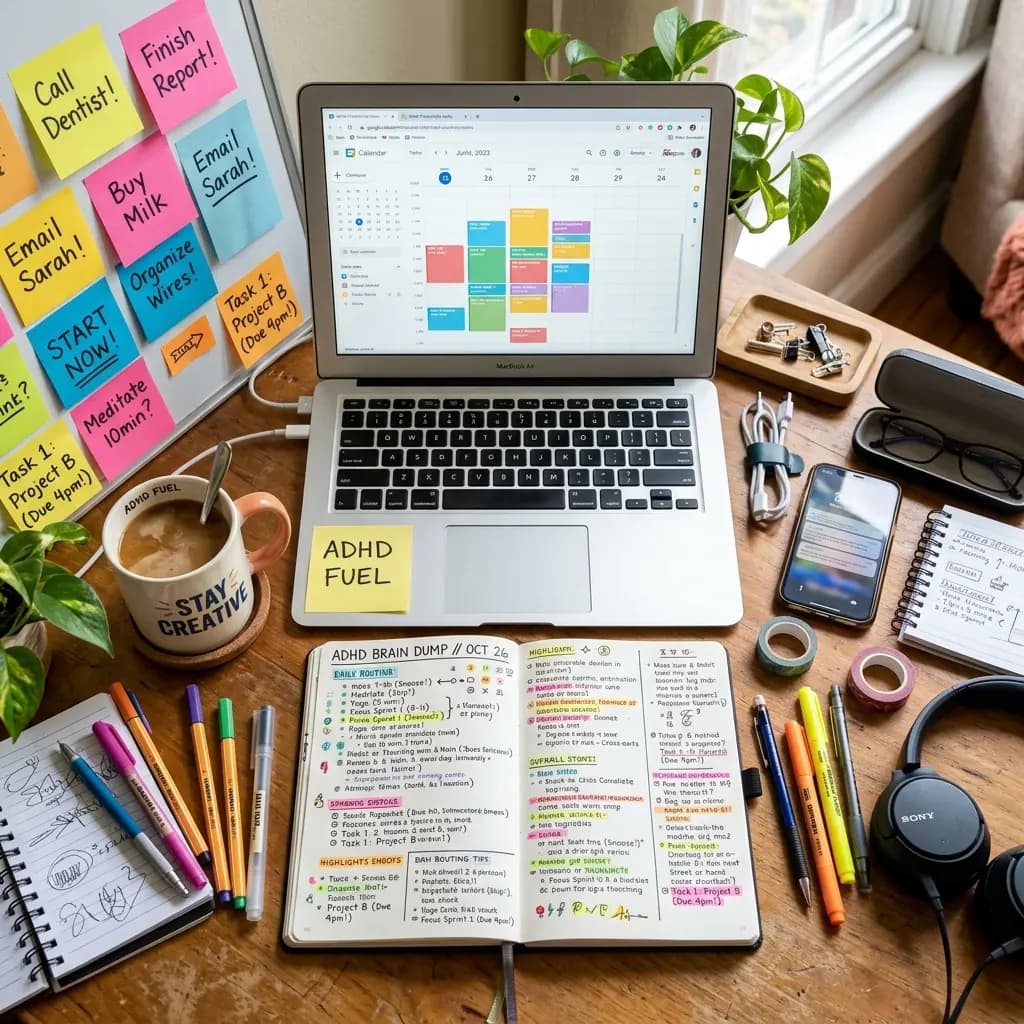
- Giant colorful sticky notes on the bathroom mirror.
- Annoying alarms scheduled for EVERYTHING.
4. Getting Help From an AI-Based ADHD Routine Organizer
Heavy-duty tools like Notion end up becoming black holes of hyperfocus and procrastination, because they demand too much setup and design work.
The ideal move is to delegate your executive dysfunction. That's exactly the refuge apps like Lumi provide. With an AI-based ADHD routine organizer, you don't configure folders. You just grab your phone and say into the mic: "Lumi, I need to do my college assignment and wash the dishes, I'm frozen, help me break it down and remind me in 10 minutes."
And the AI takes care of following up with gentle micro-notifications that hold your mind steady. Technology can — and should — act as your cognitive executive assistant. Don't try to fight your biological wiring with pen and paper; automate it instead.