Is Online Therapy Worth It? Pros, Cons, and How It Works
Wondering if online therapy is worth it and whether it actually works? We break down what the science says, the pros and cons, and how to get started safely.

The digitization of mental health has transformed how we pursue wellbeing. What once required a trip to a physical office can now happen from the comfort of your couch. But with the explosion of digital platforms, many still wonder: is online therapy worth it? Is it as effective as in-person therapy?
In this article, we break down what recent scientific studies say, the main pros and cons of the online format, and how to use complementary daily tools to get the most out of it.
What Does the Science Say About Online Therapy?
A common concern is whether the lack of in-person eye contact and body language reduces treatment effectiveness. Several recent scientific studies — including research from the American Psychological Association (APA) — show that online therapy is just as effective as in-person therapy for treating anxiety, depression, PTSD, and ADHD.
The Cognitive Behavioral Therapy (CBT) approach adapts remarkably well to the digital environment, since it focuses on practical thought restructuring, mood journals, and structured exercises the patient can do on a computer or phone.
Pros and Cons of the Online Model
To help you decide if this format fits your routine, here are the main pros and cons:
Pros:
- Convenience and savings: No commute costs or time lost in traffic. You can have your session on a work break or straight from home.
- Access to specialists anywhere: You're not limited to therapists in your neighborhood. You can choose the right professional for your needs, regardless of where they're located.
- More comfort and privacy: Many people feel safer and less inhibited opening up from their own familiar environment.
Cons:
- Requires technology: Depends on a good internet connection and a device (phone or computer) with a working camera and microphone.
- Needs a quiet space: If you live with several people or lack privacy at home, it can be hard to speak openly without fear of being overheard.
- Not suited for severe crises: Acute psychotic episodes or severe ideation require in-person intervention from emergency care teams.
How to Get More Out of Your Therapy Day to Day
Weekly psychotherapy lasts 50 minutes. But what do you do in the other 10,000 minutes of the week, when anxiety tightens its grip or self-sabotaging thoughts take over?
That's exactly the gap continuous support technology fills. Lumi works as the ideal daily complement to your traditional therapy:
- Active emotional journal: A space to log your mood shifts and vent in real time, organizing your thoughts before your next session with your therapist.
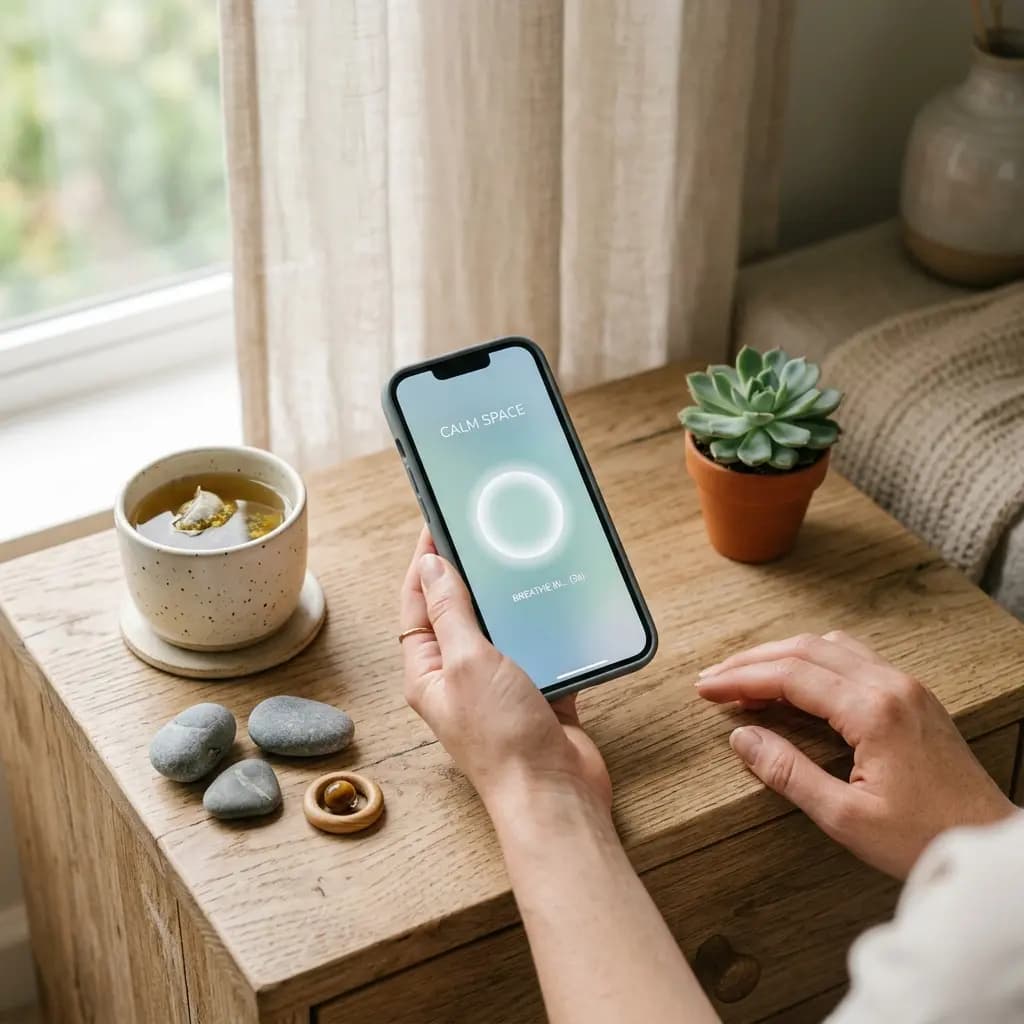
- Quick CBT exercises: Guided breathing, progressive muscle relaxation, and automatic-thought reframing — right in your pocket, free, 24 hours a day.
Online therapy is worth it and represents a massive leap forward in accessibility. Visit our homepage to start taking care of yourself today!